
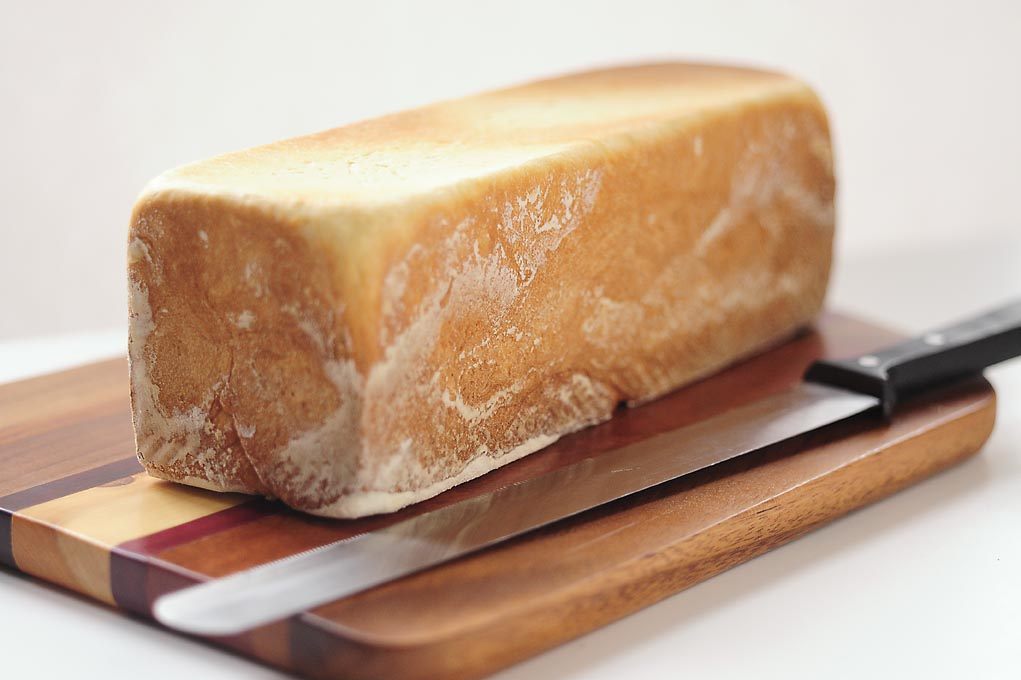
It had been another rainy, cold spring day here on the East End of Long Island. If the temperature had been below freezing, we would have picked up a foot or so of snow. I was forlornly looking out the kitchen sliders at our seedlings struggling to germinate and grow. I sighed, shrugged and thought…you know, this is a perfect day to bake a loaf of pain de mie.
This is the first bread I learned to bake, and it is still one of my favorites. I’ve made it in several different countries, at sea, and on a Caribbean island. It’s very easy to make: although it can be made as a free form bread (think boule), it’s traditionally made in a Pullman pan. In the US, it’s often called a Pullman loaf. I suspected the name had to do with the fact that the Pullman form is long and resembles a Pullman car which was a ubiquitous part of American railroad travel. A quick google search sort of confirmed my suspicion, but not quite.
Because kitchen space was at such a premium on trains, especially on Pullman sleeper cars, someone figured out, long rectangular loafs of bread took up a lot less space than circular loaves. The Pullman Company started producing Pullman forms in which to bake their bread for the railroads. Commercial bakeries caught on to the idea, and the white bread sandwich loaf was born.
Make no mistake, my pain de mie, or Pullman loaf, is definitely not even close to Wonder Bread. They’re in separate baking universes. I use it for everything from French toast, to sandwiches, to trimmed crust points for canapés.
It was still raining outside, albeit, everything was gloriously green and not buried under snow. But the best part is the 2GM house smelled incredible from fresh baked bread, and I couldn’t wait for a slice of the still warm bread.
Ingredients:
6 ¼ C of Bread Flour
1 Tbsp powdered yeast
2 Tbsp sugar
1 Tbsp salt
1 Cup milk warmed to 90 degrees
2/3 Cup water at room temperature
¼ Cup melted unsalted butter, cooled
3 large eggs
Method:
Sift the flour, sugar and salt together. Pour the milk and water in a mixing bowl with the yeast: let proof for about ten minutes. Add the flour mixture and mix with a wooden spoon until combined. Transfer to a stand mixer with a dough hook and knead for three minutes at low speed. (Of course this dough can be hand-kneaded. Simply follow the order of ingredients listed below.) With the mixer still kneading, add each egg, one at a time until combined. Then add the melted butter. Increase the mixer speed to medium and knead until velvety smooth, about 5 minutes.
Remove from the mixing bowl to a large ceramic bowl, and let the dough rise for two hours in a warm, draft free place. The dough will double in volume. Turn it out onto a work surface, deflate it by pressing down on it with both hands, and then fold it in half and shape it to fit in a buttered and floured Pullman pan.
Pre-heat oven to 425 degrees, and let the dough rise in the Pullman pan for about 45 minutes or until the dough has risen to ¾ of the pan’ height. Slide the cover onto pan and bake in a hot oven for 45 minutes. When finished, remove from the oven, and turn the loaf out onto a cooling rack.
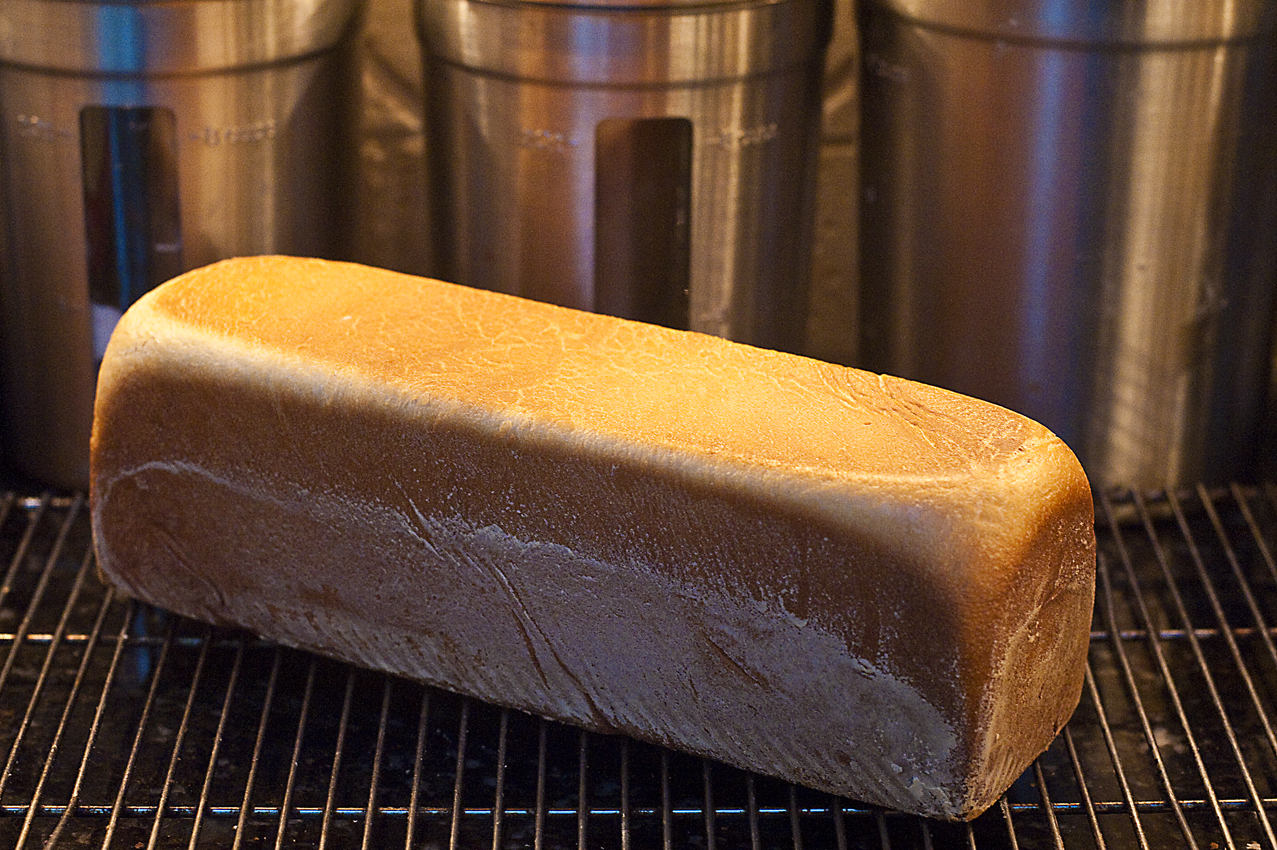
IMPORTANT NOTE: Never under estimate the power of yeast! I’ve had many loaves expand in the hot oven, literally blowing the lid off the Pullman pan. If that happens, it’s by no means a catastrophe; you simply end up with a domed loaf, and a slightly courser crumb. In order to guarantee a perfect rectangular loaf, I always put a heavy weight onto top of the lid in the oven. I use a couple of large, heavy bricks.
RMA

1 comment
After making hundreds of different breads as a hobby, just made your Pullman loaf. ABSOLUTELY THE BEST. IT DANCED OFF THE PLATE. WILL TRY YOUR OTHER RECIPES. THANKS SO VERY MUCH.