
Where have we been? Actually, we’ve been right here at the home of 2Gourmaniacs, cooking, writing, and photographing. But, as you can see our blog site has been revamped, spruced up, redesigned, and generally improved. We like to thank Rachael Butts for her time and effort to make this a reality, and if anyone’s looking for a WordPress or website designer / developer, I’d strongly recommend contacting her. As a way to start off our new look, I thought I’d post a food writing story about a travel adventure I had several years ago which, coincidentally involved food and/or the lack of it.
A while back I did a photo documentary project in India about how handmade oriental rugs are made. It is a subject with which I am quite familiar as a professional photographer. I had been to India as well as Pakistan and Nepal before so I knew what lay ahead. The one major difference for this trip was the time of year I would be traveling in India. In terms of personal comfort, the ideal time to go to India is either right after monsoon, in late October or November, or in late February or early March. By May, the heat is on and it becomes extremely uncomfortable. My plan called for late June to mid July. Needless to say, I’ve never been so hot in my life.
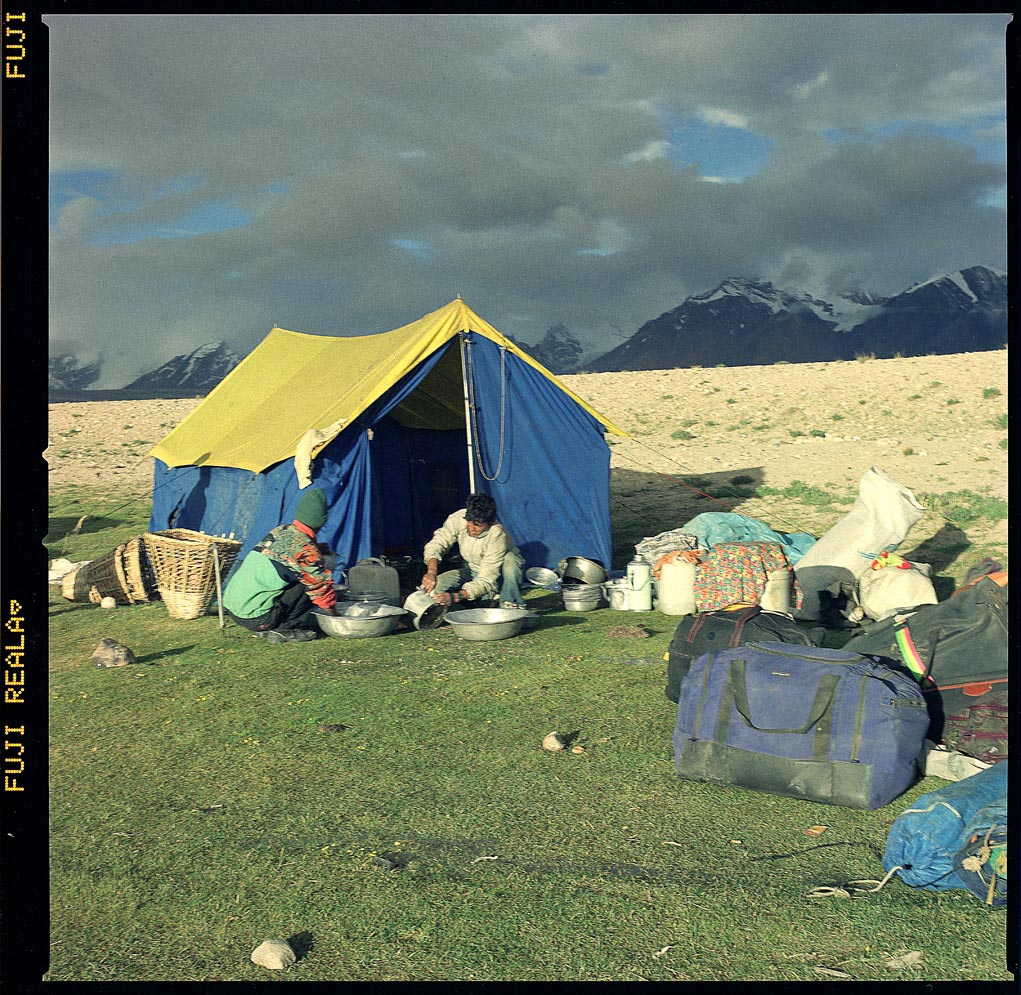 As I planned my trip from the comfort of my home office desk, I impulsively decided to sign up for a trek in western Tibet before going on to India. I had had some trekking experience in Nepal, and I had always wanted to go to Tibet. One of the issues for westerners (or just about anyone) is that when traveling in Tibet you can’t just show up at the border and be on your way. The Chinese have different ideas when it comes to independent travel in Tibet: they maintain a very strict and rigid control over the Autonomous Region of Tibet, and aside from having to have a Chinese visa, I also had to attain a Chinese issued permit to enter Tibet. And in order to get to where I wanted to trek, I had to be part of a government sanctioned tour or expedition. Prior to leaving the United States, I signed up online for an overland expedition with twelve Hindus from Calcutta. They were on a religious pilgrimage to western Tibet to Mt. Kailash, the most sacred mountain for Tibetan Buddhist, the Bo people, and Hindus. I mean how bad could it be? I wanted to go and take one lap around the mountain on foot. By coincidence, the Hindu pilgrims and I arrived in time for the annual celebration of Sagadawa, or the anniversary of the enlightenment of the Buddha in early June. Without getting into what might or might not be an interesting travel
 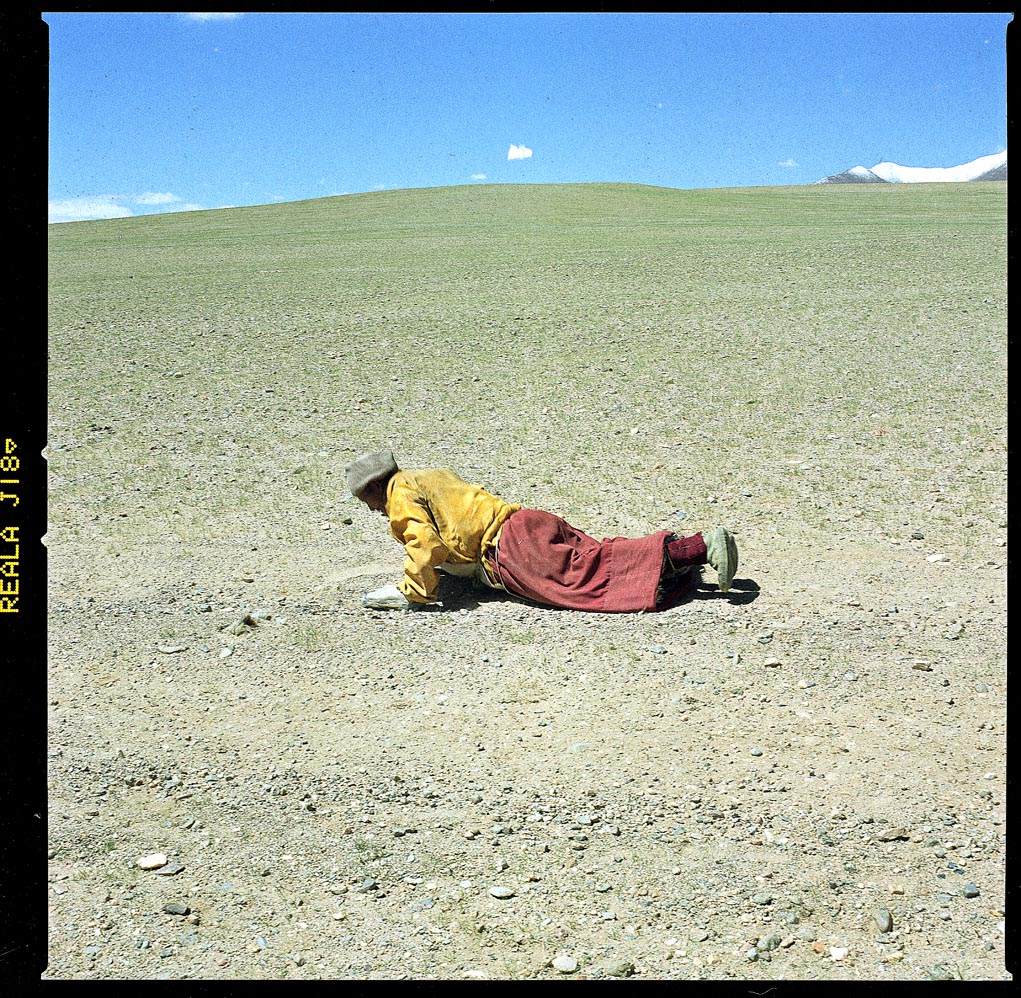 story, let me say that during nearly a month of traveling overland with no roads, at a minimum altitude of 14,000 feet and reaching almost 20,000 feet during my actual trek, I lost nearly twenty pounds. When I arrived in the Tibetan capital, Lhasa, after my trek around Mt. Kailash, I was hungry, dirty, and none of my clothes fit me. The Hindus that I traveled with had required a vegan diet, and even without that stipulation. In hindsight, it’s hard to imagine that I could have found and consumed enough calories to maintain my initial body weight. And from a previous not so pleasant high altitude experience gained in the Andes in South American, I knew better than to drink any alcohol. Not that it was even an option with twelve Hindus on religious pilgrimage chanting and prostrating themselves sporadically along the way to and from Mt. Kailash.
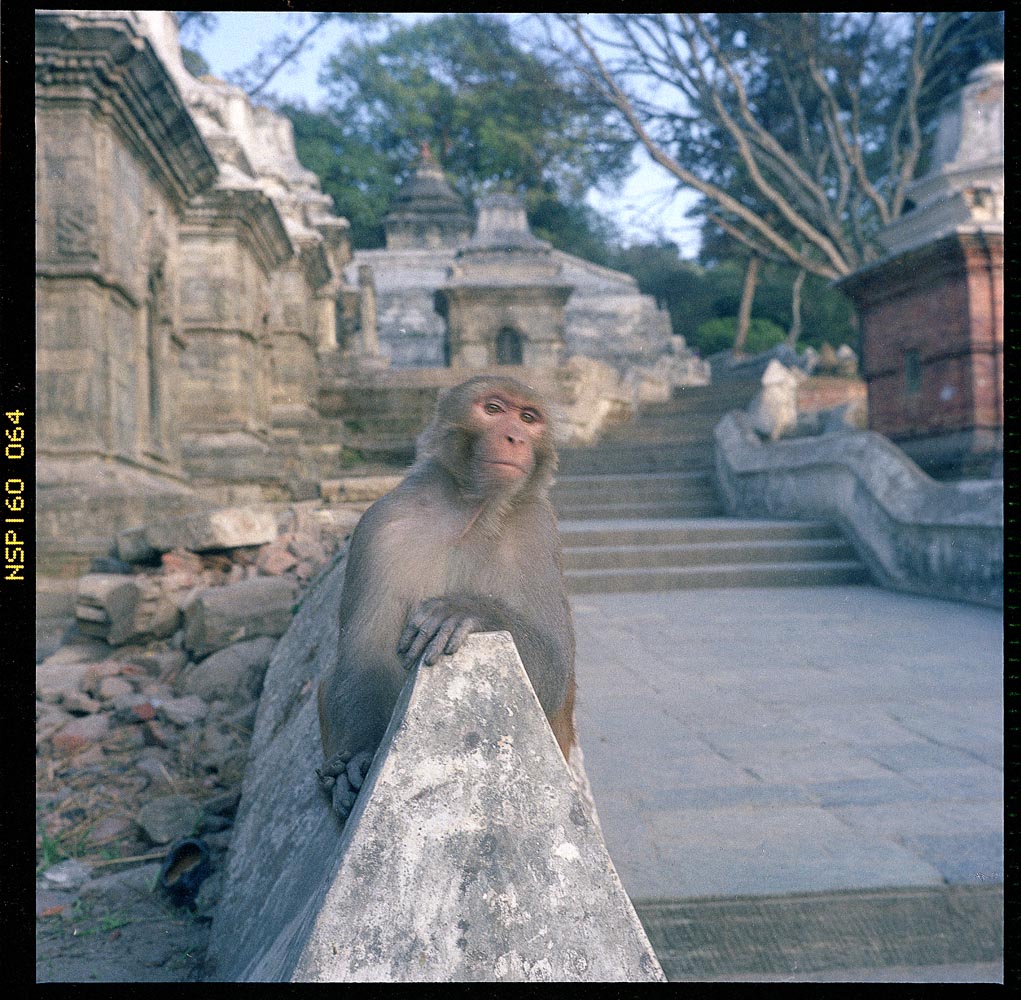 From Tibet I flew to the Nepalese capital, Katmandu, where I did some initial rug making documentary work with Tibetan refugees who I had previously met there. Also, I started consuming some substantial calories in the form of dals, legumes, rice, and an occasional yak burger. From Katmandu I then flew to Varanasi, India. Varanasi is about a forty-five minute flight south of Katmandu, just over the southern Himalayas, and the last time I had been in the Nepalese capital there was air service several times a week between the two cities. Since then, that had been terminated resulting in having to fly to New Delhi, then changing flights and airports to get on the “local” plane which made stops in Agra, Khajuraho, Allahabad, and finally Varanasi. I got off the plane in Varanasi after what for some might be considered a hair-raising flight on Indian Airlines (most flights are) as the pilot swerved and banked continually avoiding thunderstorms and lightning strikes. The late June temperature hovered at 110° with a humidity level that made Key West in the summer seem like Arizona desert in the winter.
At the airport I was met by a distinguished looking Indian gentleman named Shafiq. He and I would become very good friends over the course of the next couple of weeks. Shafiq and his driver took me to a walled-in compound in Mirzapur, a small city on the southern bank of the Ganges River, about an hour and a half west of Varanasi. Within the compound there were both marble floored residential quarters, where I stayed, and also the headquarters for a large rug exporting business as well as a small mosque. The people I was visiting were extremely devote Muslims, something of a minority in India, and, well, if you watched television or read newspapers recently, or you remember your Indian history during Partition in 1948, you know about Muslims and Hindus in India. My hosts were kind, generous, and gentle.
 So, after this long preamble, what did I eat in Mirzapur? Allow me to preamble a bit more now that we’re on the right path, talking about food, that is. On previous trips to India and Varanasi with westerners, I often watched with incredulity as some of them would gain a dining-room table in the best hotel in town and open their briefcases, rummage around and bring out a couple of cans of Bumble Bee or Chicken of the Sea tuna fish. Some even had their own can openers with them. The first time I saw this, obviously I asked why. Their explanation was they didn’t want to get sick from eating indigenous food. As we all know, I am a fearless omnivore regardless of locale; and as Rosaria, my wife, knows all to well, I get sick just about wherever I go outside of the USA. (Also this may be a subject of another interesting travel tale, I’d suggest you ask Rosaria). And yes, I’ve gotten very sick in India. I’ve come back to New York with things in my gut that have confounded western medical science. “Just let it work itself out.” was the final advice one Manhattan physician once gave me several years earlier, and it finally did work itself out, but not without an awful lot of discomfort, a major investment in Charmin, and being on a constant look out for the closest bathroom. Yet, I had eaten some incredible things in southwest Asia.
 Back in India, things got going early in Mirzapur, especially during the sweltering hot summers. When I came down after my first night I was greeted by servants, one of whom ushered me onto a small marble terrace overlooking the side of the compound which, for the most part, was choked with brown, woe-be-gone looking weeds already wilting in the early morning heat. From the other side of the high wall I could easily hear the ubiquitous Indian cacophony of motor vehicle horns, two cycle engines, and loud shouting. A different servant appeared with tea, and he inquired in respectable English what I’d like for breakfast. My gut was still a little unsettled from high altitude and from having been sick off and on for a month. I replied that two eggs over easy would be nice, and some toast, and did they have any coffee? Of course, he didn’t have any idea what I was talking about, but he just smiled and disappeared inside.
Nighttime temperature in western Tibet in June was below freezing, at Mt. Khailash it snowed, and it snowed hard during my trek around the mountain which took several days. Here, in Mirzapur, at 6:00 am, it was the temperature of blood. I drank my black tea and started what I would continue to do for the rest of the time I remained there. Sweat. Sweat like I’ve never sweat before. I couldn’t stay dry for five minutes. I was soaked all the way through. After an hour or so, I could wring water of out my clothes. Even my running shoes were drenched as sweat ran down my legs.
 A small man in a white jacket appeared by my table on the marble terrace. He bowed a little and inquired in good English if I could perhaps explain to him how I’d like my breakfast. He said his name was Amir and that he was the cook. I explained how I’d like to have my two eggs fried and flipped. Toast he understood. Breakfast arrived with two eggs gently fried in ghee, two pieces of Indian white bread that had been “grilled” over an open gas flame, a sliced banana, and small pot of excellent black Indian coffee, and a mango. I noticed the mango was larger and a brighter yellow than those to which I was accustomed in the United States. I was just finishing my breakfast when Shafiq strode through the door. After exchanging pleasantries, I rose up from the small table, ready to begin the first day of photographing. He paused and asked how I liked the mango. I replied that it was delicious. He smiled and we went on our way.
 Over the course of the first week, Shafiq and I settled into a routine of rising early, I’d have fried eggs, toast, banana, coffee and a mango for breakfast; then he’d drive me to different locations, usually in small outlying villages where various parts of he rug making process were taking place. The handmade oriental rug industry is basically a cottage business which, on a large scale level, requires an almost Kafkian sense of logistics and bureaucracy to keep track of everything, and to have the final product come out they way it was initially intended and designed. Shafiq co-managed one of the best Indian rug export business in India. He would try to find someplace for us to spend the hottest part of the afternoon, usually with a business associate or someone who was a supplier for the rug business which he managed. I was treated like royalty. Wherever we stopped to pass the heat of the day, meals would magically appear: dals, tandooris, spicy soups, and fruit. Many were incredibly good. And as I mentioned, I would be soaking wet from sweat, but I’d be the only one as I don’t recall ever seeing anyone else break a sweat. At one place, the owner who had a huge meal prepared prior to our arrival, took one look at me, tssskked, and had one his men fan me with a large palm during my entire meal. Somewhat uneasy at being fanned, I didn’t know what to do. But I was slightly cooler and of course, I ate.
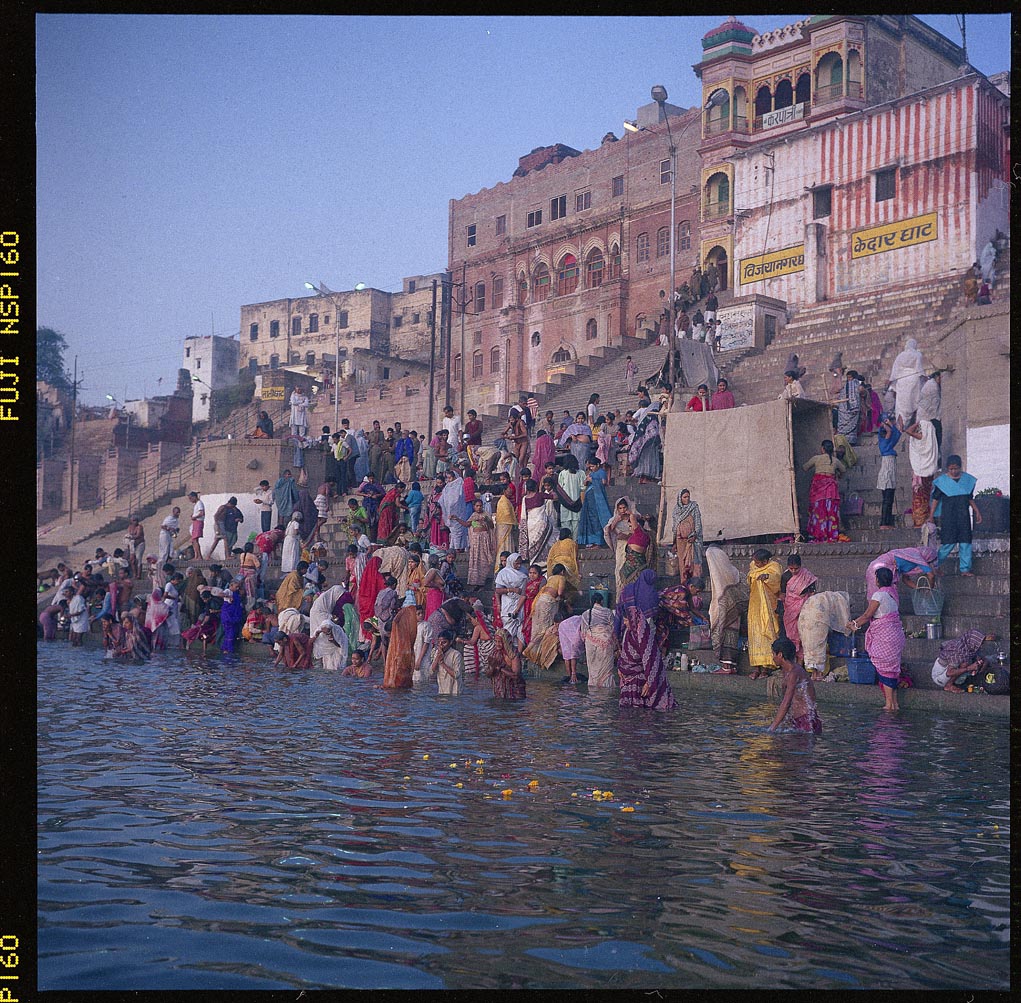
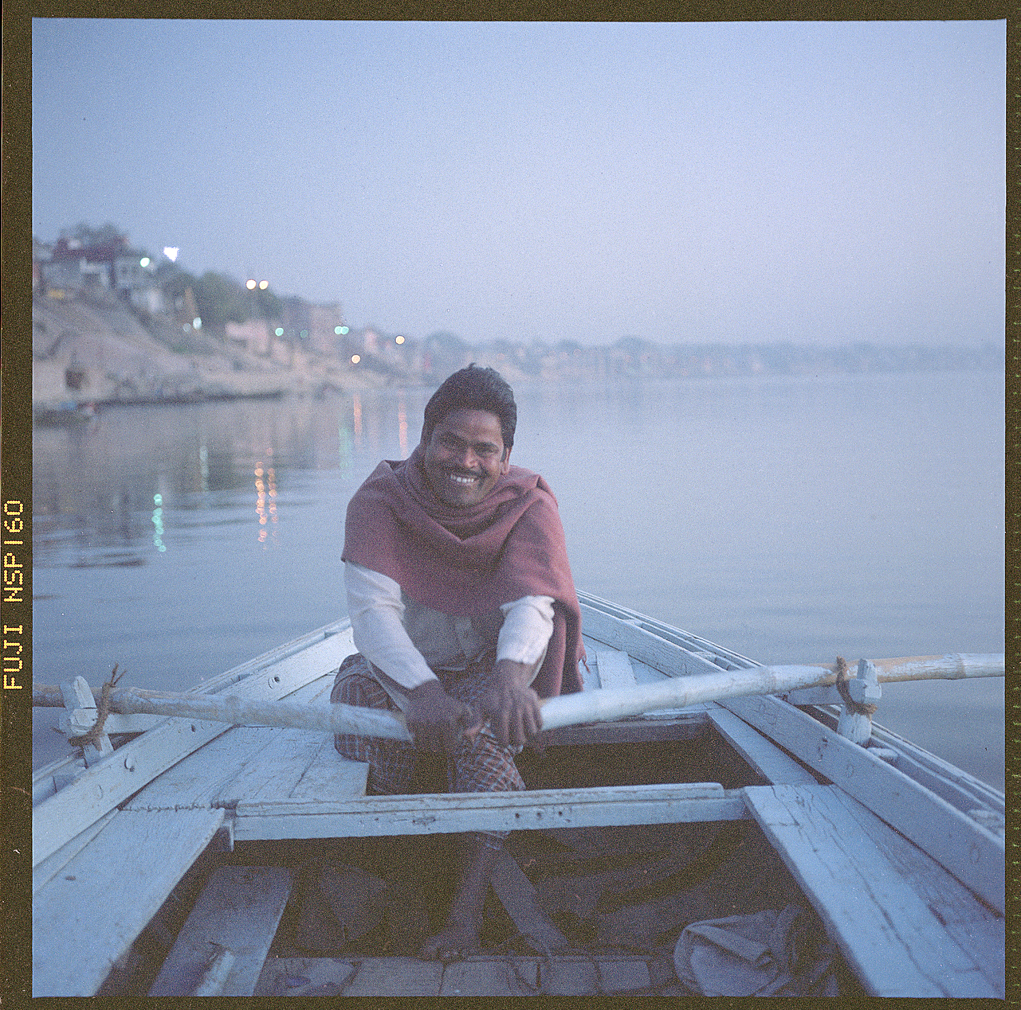 Evenings at the compound were quiet, very quiet. Since this was a Muslim household, there was no alcohol. I had had a liter of Grey Goose stowed in one my bags since I left Kennedy Airport in New York, you know, just in case. Tibet was too high to drink alcohol. Now, here in India, it was just too hot to even consider drinking vodka. Further, it had been sitting in my bag and it was as hotter than the tea steeping in my cup; and besides, I hadn’t seen an ice cube since I’d been there. As we settled into the daily rhythm of rising early, driving and photographing during the daylight hours, a couple of times, to break the monotony in the early evening as the heat relented a bit, Shafiq took me down to the Ganges river where he’d hire a boat man in flat bottom boat about twice as big as a standard rowboat, and we’d float around on the Ganges with him and me reclining on very dirty cushions on a raised platform in the stern. Shafiq would tell me about himself, about growing up in Mirzapur, and the Ganges River which to an Indian Muslim has absolutely no religious or spiritual significance. He told me how children love to swim in it, and although not a great swimmer himself, he had learned to swim about four hundred meters upstream from where we were floating. I looked up stream. At Mirzapur, the Ganges is a very wide brown expanse of water, slow moving in the heat of July. I told Shafiq that I had been on the Ganges before, downriver in Varanasi where I’d watch funeral pyres on the ghats, the burned remains are brushed into the river, I had seen numerous dead animal carcasses float by, I’d even been out on the Ganges for Hali, a Hindu festival involving all kinds of celebrations where you inevitably end up covered head to toe in a rainbow of colored dyes and powders. He gave me a simple smile, and sort of dismissed the topic with a wave of his hand. Hindu celebrations were as meaningful to him as the Holy sacrament of communion is to a Southern Baptist.
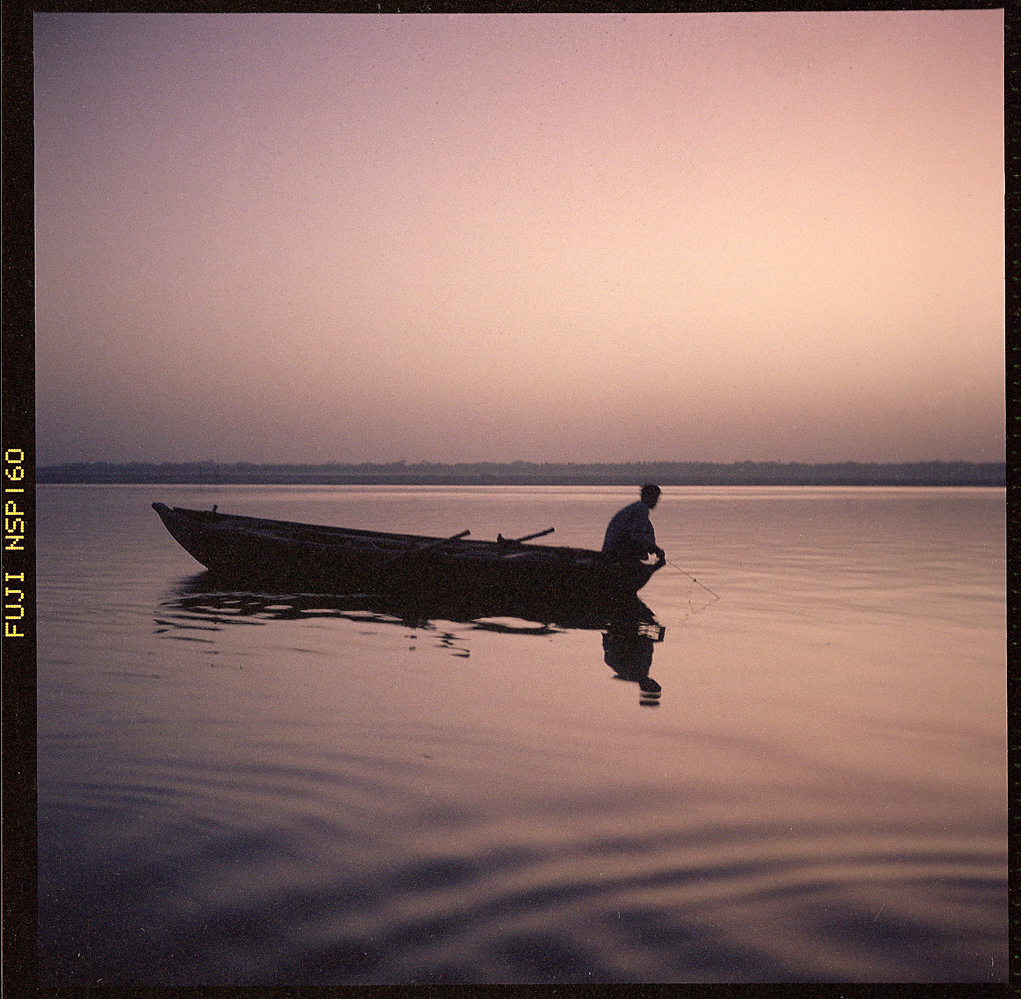
As we prepared to return to our launch point, I asked Shafiq what sort of fish were in the Ganges because I had seen men in small boats fishing at dawn. He explained that there were lots of different fish in the river. I nodded my head, but I seriously doubted it, especially with the amount of pollution that I’d seen run off into the huge waterway: think of the Passaic River in Northern New Jersey in the ‘60s.
Towards the end on of my first week at the compound in Mirzapur, the significance of Shafiq’s initial inquiry as to I how found that first morning’s mango became apparent. For dessert every night, Amir the cook would always bring us a basket with six or seven mangoes in it. A mango was a great finish for the predominantly vegetarian fare that Amir was preparing daily. One night Shafiq informed me that I wasn’t peeling and cutting my mango correctly. This was after about six days of eating mangoes for breakfast and for dessert at dinner. I watched him as he neatly spiraled his knife around the mango and the skin just seemed to slip off. Next, he sliced the mango without any prior inspection of which way the pith ran inside the fruit. Two orbs of mango fell away from the pith. He looked up and smiled, and then he told me a story about when he was a teenager, how his cousin and he had mango eating contests. He claimed that they could each consume several dozen mangoes before one of them would have to quit. To Shafiq, mangoes were the king of fruits. He went on to tell me how to select the perfect mango. After that meal, each day during our travels, Shafiq and I would stop to select and buy mangoes. It was like mango boot camp. My first several selections weren’t up to spec as far as Shafiq was concerned. He’d select his and I’d select mine. Then we’d have a taste test. Needless to say we were into the subtle nuisances of mango. But I got it, and there was a subtle difference. The secret was not only visuals of color and the tactile quality of the fruit’s ripeness, but the weight and the shape. It’s not easy to explain. One thing was for sure: I was eating mango three and four times a day. And although I felt as though I had started to put on a few pounds since I had arrived in India (all the tuna fish eaters would be shaking their collective heads in disbelief), with all this mango fruit I was eating, daily regularity was, how shall I say, greatly enhanced.
 Several nights after what I like to refer to as “our last Ganges float”, we sat down for dinner. Shafiq announced with a little more than usual ceremony that Amir had made a special treat just for me. I was flattered. I adjusted my posture in my seat and waited with anticipation while the cook brought out a plate with what I immediately identified as fish. Utter Pradash where Mirzapur is located in India is landlocked, and a long way from either the Indian Ocean or the Bay of Bengal. I glanced up at the cook who was beaming proudly at me. I looked over at Shafiq and asked, “Where’s the fish from Shafiq?” as if I didn’t already know. He explained that Amir had been trying to find a fresh fish for several days just to surprise me. And, boy was I surprised! Both their faces were joyfully smiling at me. I hesitantly looked down at the fish. It was a pathetic looking creature, mostly bones, with the skin and head on, about the size of a piranha, that had been fried in a small pond of ghee.
I had no choice.
I first asked if Shafiq wouldn’t like some as well.
“No, no!” he replied, “I know it’s small, I want you to enjoy it all.”
Again, I had no choice. Fortunately, there wasn’t much flesh to it. Second, there were about a dozen mangoes to pick from for dessert. So how was it?
My recollection of it was that it tasted somewhat like catfish, except a little muddier. And the good news is I lived to tell about it. Actually I didn’t even get sick. Maybe enjoying three or four mangoes for dessert had something to do with cleaning my digestive tract.
As the last day of my documentary project drew to a close, Amir grew agitated and nervous, and not because of my imminent departure. For the past several days, Shafiq had been keeping me updated as to the condition of the cook’s daughter who was about to give birth. She had tried several times before, and she’d always lost the babies. The morning before I was set to leave, Amir was absent, and an old Indian woman struggled with fried eggs and coffee for my breakfast. Shafiq arrived several minutes with downcast eyes after I sat down on the terrace, and informed me that Amir’s daughter had lost her baby once again. I felt terrible. Naturally, I thought of my children, and I tried to put myself in the nightmare position of a parent loosing his or her child, or of a grandfather watching his own child loose her baby. I lost all appetite. I got up and walked in the weed blown side yard of the compound letting the sometimes grim reality of India wash over me.
Overhead, the sky turned gray, and then dark. There was a huge clap of thunder and the wind suddenly picked up. At first it was like a blast furnace blowing in my face. And then I could smell the rain approaching. I had only read about the looming monsoons on the sub-continent: and for several moments I had no idea about what was going to happen. The skies literally opened up, and sheets of water started falling down. The temperature quickly dropped ten or fifteen degrees. The side yard was instantly transformed into a mud bath. I ran for shelter in the main house of the compound. Workers, servants, and managers all rushed to the windows to watch the forthcoming monsoon.
Shafiq found me dripping wet, and he told me that we needed to start for the airport in Varanasi immediately if I was to stand a chance of catching my flight later that afternoon. He explained that the roads would be flooded, and some may be impassable. The hour and a half trip turned into four hours. He packed snacks for us, including several mangoes. During the ride in the car, I watched Indians sitting and squatting on the roofs of roadside stands as water swirled around them. Our driver seemed impervious to the flooded conditions and the roadways that disappeared under small ponds of water. For me the ride to the airport was filtered by the sorrow I felt for Amir and his daughter. Almost there, Shafiq who was sitting next to me in the back seat spread a napkin on his lap, and he peeled us one last mango to share.
