
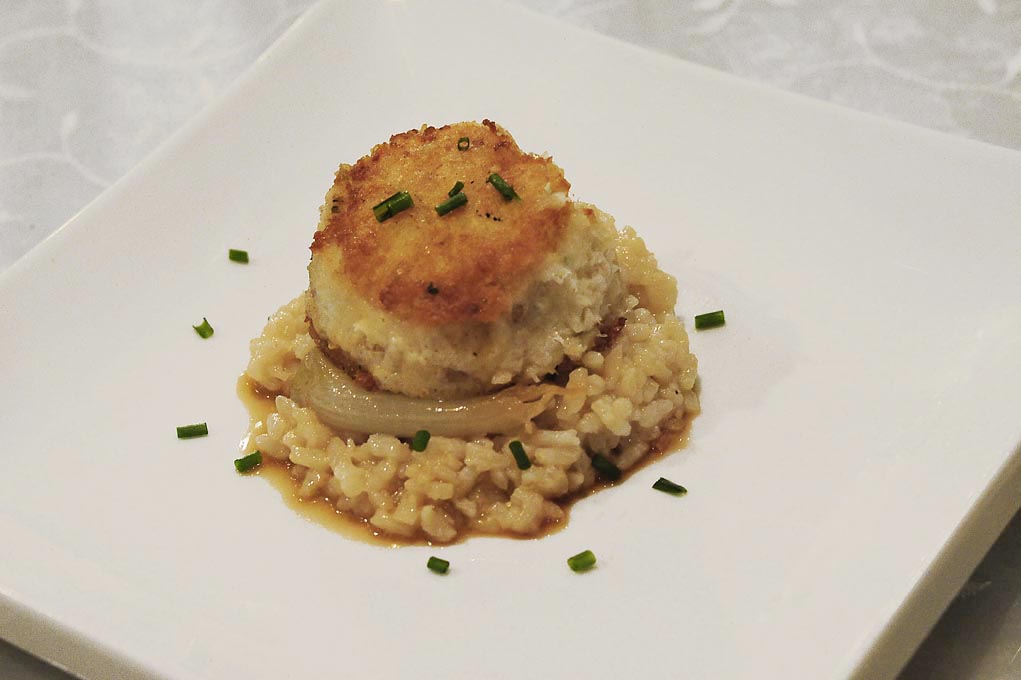
Cod cake over risotto and braised endive
With all the cod cakes that we’ve served recently at 2gourmaniacs, and spurred on by Edie and Lewis’ recent comment to the post “My Big Fat Italian Christmas Dinner”, I figure it must be time to do a piece about Cod Cakes and share my recipe. The first thing you want to keep in mind is to try and buy fresh cod as opposed to frozen. Clearly, the recipe will work with frozen, but it will likely lack the briny fishiness of fresh cod, and I suspect the texture will be somewhat different. I personally love the flakiness of cod. Edie asked me if she could substitute salmon for cod. I don’t see why not, although I’ve never tried it. So Edie, if you read this, bring Lewis and come on over; we’ll give it a whirl with salmon. Here’s how you make 2gourmaniacs Cod Cakes.
~ 3/4 lbs potatoes, peeled and chopped (my favorites are Yukon Gold, but living on Eastern Long Island, with its large tradition of potato farming, I like to use local potatoes especially at harvest time in the fall).
~ 2 ½ lbs of fresh cod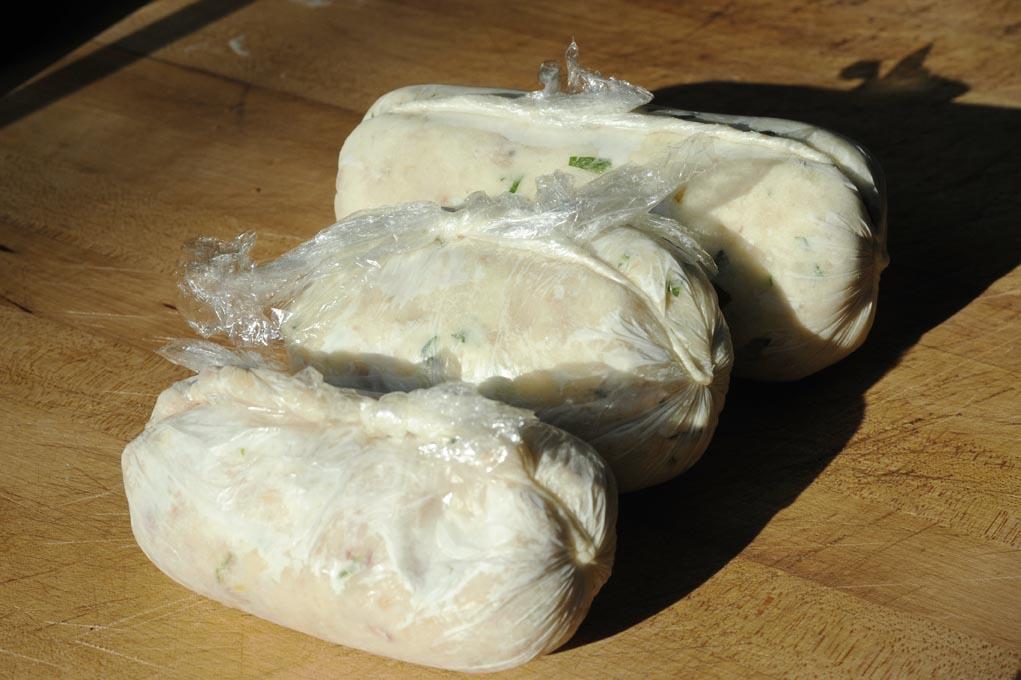
~ 2-3 medium shallots
~ 1 ½ cups dry white wine
~ ½ head of garlic
~ 8 thyme sprigs, chopped
~ 14 black peppercorns
~ 1 T sea salt or Kosher salt
~ 6 T unsalted butter (optional)
~ 3 T olive oil
~ ¼ cup chopped parsley
~ ½ cup of flour or Wondra
~ ¹⁄³ cup of canola oil
~ 6 T unsalted butter (for sauce)
~ chopped chives or parsley
Add the peeled and chopped potatoes to salted, boiling water in a large pot or sauce pan (I like using plenty of water to thoroughly cover the potatoes). While the potatoes are boiling over medium heat, place the cod fillet(s) on a cutting board and trim them, paying close attention for bones. In a large sauté pan, put the wine, shallots, garlic, thyme, and peppercorns, and cod trimmings (bones and skin too), bring to a “lazy” boil, then add the cod fillet. Cover the pan with a lid (actually I cut a piece of parchment paper to fit the sauté pan, but I know it can be inconvenient). Steam the cod for 5 to 7 minutes, or until tender but still flaky. Needless to say, cooking the cod is going to take a lot less time than boiling the potatoes, so when the cod is done just turn off the heat, and set the pan aside.
The potatoes are done when you pierce them with a fork and they are tender but not falling apart. Drain the potatoes and transfer to a mixing bowl. Drain the cod filet and reserve the poaching liquid for the sauce. Pat dry the cod on paper towels and place it in the mixing bowl on top of the potatoes. Start adding in the butter one tablespoon at a time, making sure you mix the potatoes and the fish until the butter is absorbed. Once the 6 tablespoons of butter are in the mixture, go ahead and add the 3 tablespoons of olive oil and the chopped parsley. (NOTE: if you wish to omit the butter, substitute 4-6 tablespoons of olive oil, adding one tablespoon at a time. Carefully check the consistency after each addition to prevent the mixture from becoming too oily.) Add the salt and taste carefully. I find that the potatoes soak up a lot salt, so salt liberally. Give the mixture several grinds of fresh pepper and taste again.
Put the mixing bowl with the mixture in the refrigerator for at least an hour. If you cover the mixture with a piece of plastic film snug inside the bowl, it can stay in the refrigerator overnight if needed. Once it has chilled for at least an hour, take the mixture out of the refrigerator and get some plastic wrap. Take a piece that’s at least 18 inches long and spread it out neatly on the counter or a cutting board. Take a handful of the potato and fish mixture and form it into a ball, compress it and place it on the outspread plastic wrap. You can place two or three handfuls of the mixture onto the plastic film. Ultimately, you’re making a sausage-like log that’s about eight inches long and 2 ½ inches wide. Don’t worry if what you’ve scooped out seems to fall apart on the plastic wrap; just make sure the content is all lined up together on the plastic wrap piece.
Wrap the plastic film around the fish/potato mixture. Grasp the ends of the plastic wrap at either end of the sausage log, hold tight between your fingers and roll it or spin it really tight. You’ll see how this compresses the content, making it very firm inside the tightening wrapper. You should have plenty of excess plastic at either end, which is now tightly spun into a thin rope-like string. Use the excess ends to tie off the the rolled cylinder. You now have a very firm fish/potato cylinder which goes in the freezer for at least four or five hours. And here’s the good news. The logs will keep for several weeks so you can make large batches and keep them in the freezer for just those occasions when, well, you need cod cakes.
Now that you have all your cod/potato mixture rolled up into logs and tucked away in your freezer, you can cook them any time. Here’s what you do. First, decide what you’re going to have with them. The choices are almost endless. Recently, I’ve been having braised endive and risotto underneath my cod cakes, but you could have any combination of sautéed vegetables or grains. I’d like to try fresh steamed clams or mussels, or gently poached malpiques oysters. Let your imagination run wild.
In the meantime, make your risotto, or whatever you’re going to have with the cod cakes. Remember the poaching liquid that you reserved after poaching the cod? Now’s the time to strain all the stuff that’s still in it, i.e. peppercorn, thyme sprigs, shallots, garlic and any bones. Put the liquid in a small saucepan, and beat in 6 tablespoons of butter, one at a time. This is going to be your sauce. If you skip the butter, perhaps a thickener like arrow root or corn startch can be added (mix 1 T powder in ¼ cup warm water first, then add to the sauce). If you’re skipping the sauce altogether, use tartar dressing or lemon wedges for a splash of freshly squeezed lemon juice on the cod cakes.
Take the frozen cod cakes out of the freezer: if they have been in there for more than a day, zap them in the microwave for 1 ½ minutes and check to see if they are slightly thawed out – you’re looking for just the faintest hint of sponginess on the exterior of the rolled cod cake. If they need more time, pulse them in the microwave in 30 second intervals. Once you’ve got the correct texture, strip the plastic wrap off, take a serrated kitchen knife and slice the logs into ¾ inch to 1 inch thick slices. Coat them with the Wondra or the flour. Make sure you have a large enough sauté pan, otherwise get two, film the bottom(s) with the canola oil and quickly sauté the cod cakes. Stand by and carefully monitor the cooking as it goes quickly. After two minutes, flip them, and continue to sauté. They should be golden brown, and if you stick your nose right over them, they should smell slightly fishy, rich from the potatoes, and ever so buttery – if you used butter.
When they’re done, remove the cod cakes from the pan and place them in a warmed plate and / or in a warming oven. Meanwhile, deglaze the sauté pan with just a little white wine, strain it and add to the little sauce pan with the butter sauce. We’re almost there.

Lewis & Edie
Warm some plates. Take several spoonfuls of risotto and place it in the middle of the warmed plate. Next, place whatever you’ve prepared, like endives, oysters, mushrooms and put that on the risotto. Top that with a cod cake. Drizzle a little sauce over the cod cakes and spoon some around the risotto. Garnish with some fresh chopped parsely or chives, and serve.
Whew, and you thought cod cakes were easy!

2 comments
I look forward to trying this recipe. Thanks guys.
[…] always have some frozen cod cakes ready to serve either as an entre or as an appetizer. Last night, I cut the frozen cod cake […]