The 2GourManiacs are crazy about octopus. We always have been, and we can see no reason why we wouldn’t continue eating it at every possible opportunity. We’ve enjoyed it at noon and in the evening as tapas in Spain, grilled in the south of France, and in fresh green olive oil in Sicily. We seriously entertain the possibility of going to Greece for a while just to try all their variations of octopus.
Having said that, it took a long time to find the perfect method to prepare octopus. We have had experiences which resulted in rubbery tentacles and undercooked bodies. We heard that the best way to prepare octopus was in a pressure cooker – something we never really tried – while other sources touted the benefit of using a cork in the cooking liquid – something we’ve never understood. Instead, Robert tested David Chang’s slow braising method for baby octopus about a year ago with great success. He then started slow braising larger and larger cephalopods. The premise is extremely simple: cover the octopus with boiling liquid in a large casserole and place it in a 275 degree oven, covered, for about 2 ½ hours. What’s great about this delicious invertebrate is that it graciously accepts the flavor of whatever braising liquid you use. That means you can vary its final taste depending upon whether you use a traditional fish court bouillon, fumet, or in our case a soy sauce and rice vinegar court bouillon.
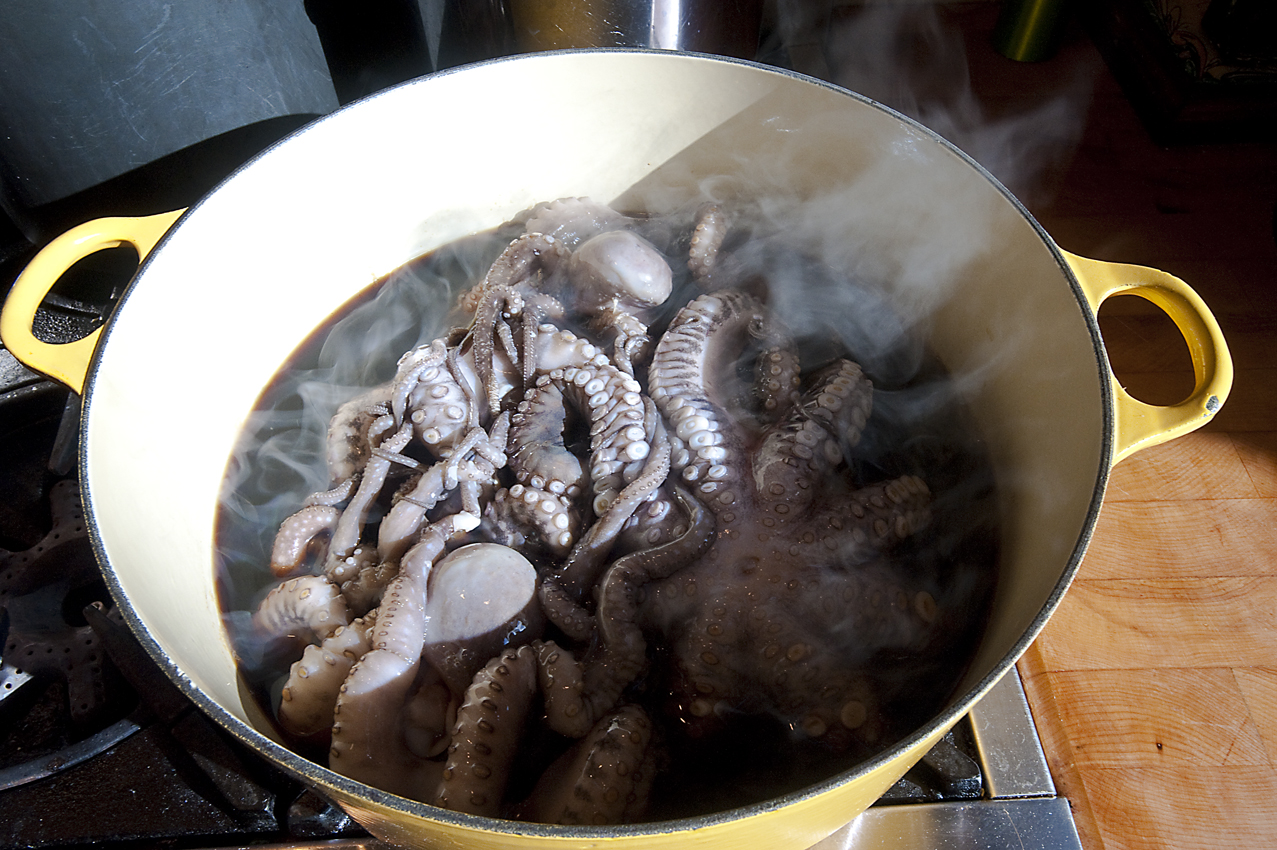
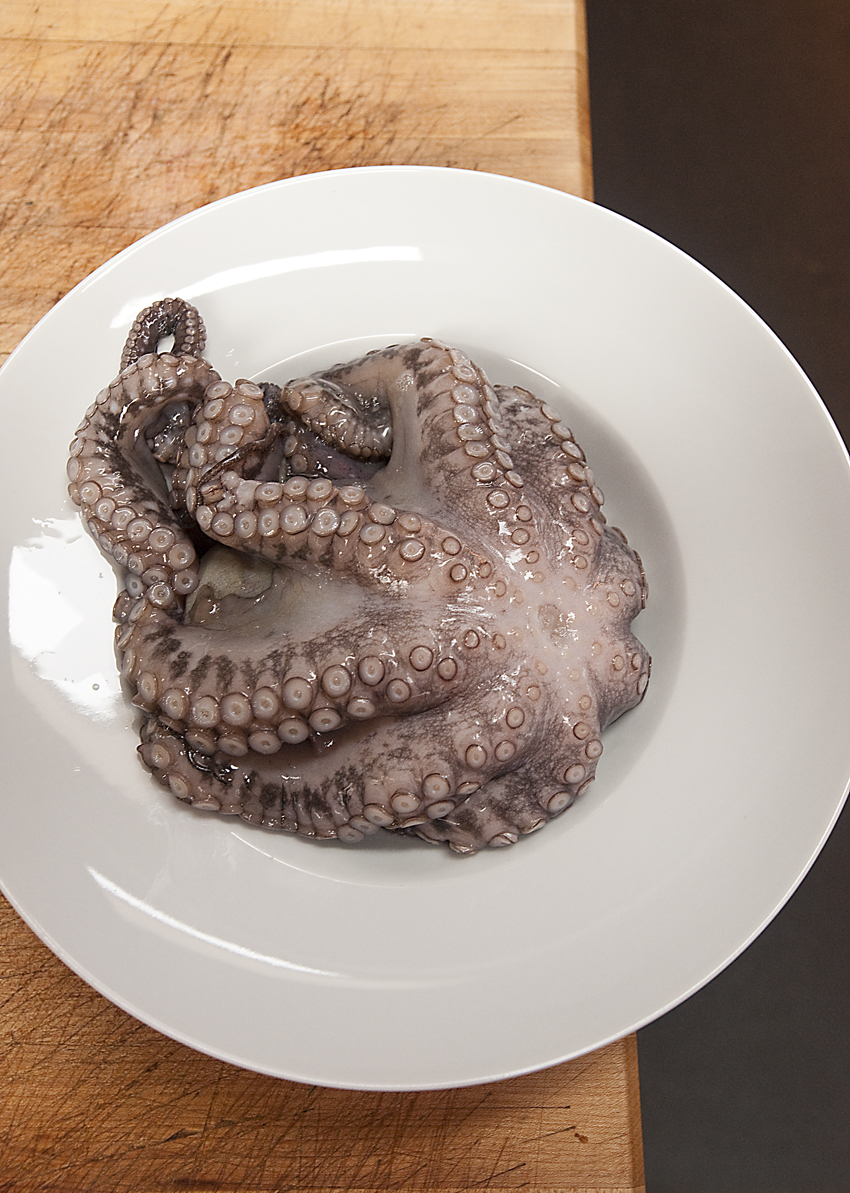
This past Saturday while on Arthur Avenue in the Bronx, we picked up four fresh medium size octopus, and a large one which looked like a stand-in character from “2000 Leagues Under the Sea”. If you can’t find a fresh one, frozen is fine too; just let it slowly thaw in your refrigerator before proceeding with the braising.
Ingredients for the Asian Court Bouillon:
Directions are for one medium size octopus. Increase the quantity of court bouillon proportionally depending on how many octopodes you are preparing.
2 cups water
1 ½ cups low sodium soy sauce
1 cup mirin
1 cup sake (cooking sake is fine)
1/3 cup rice wine vinegar or sushi vinegar
1/4 cup fish sauce
2 Tbsp neutral tasting oil (canola, grapeseed)
1 4-5 lbs octopus (thawed if frozen)
Method:
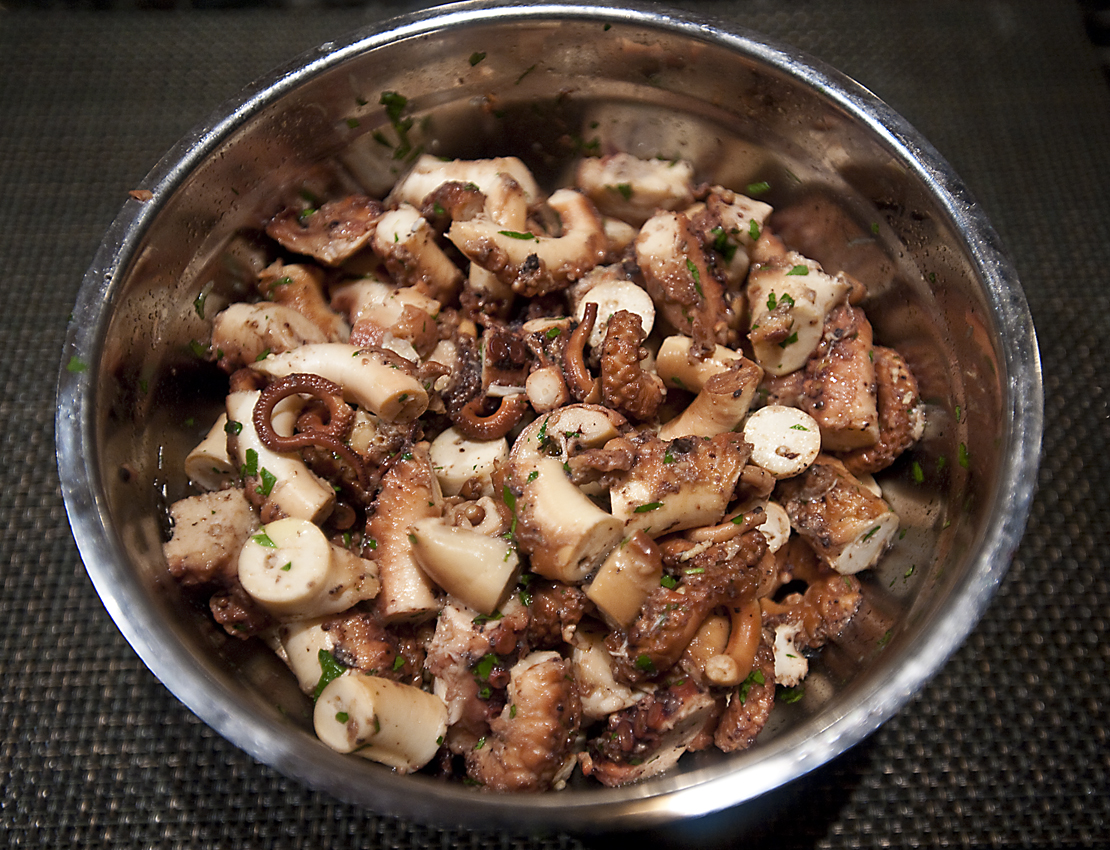
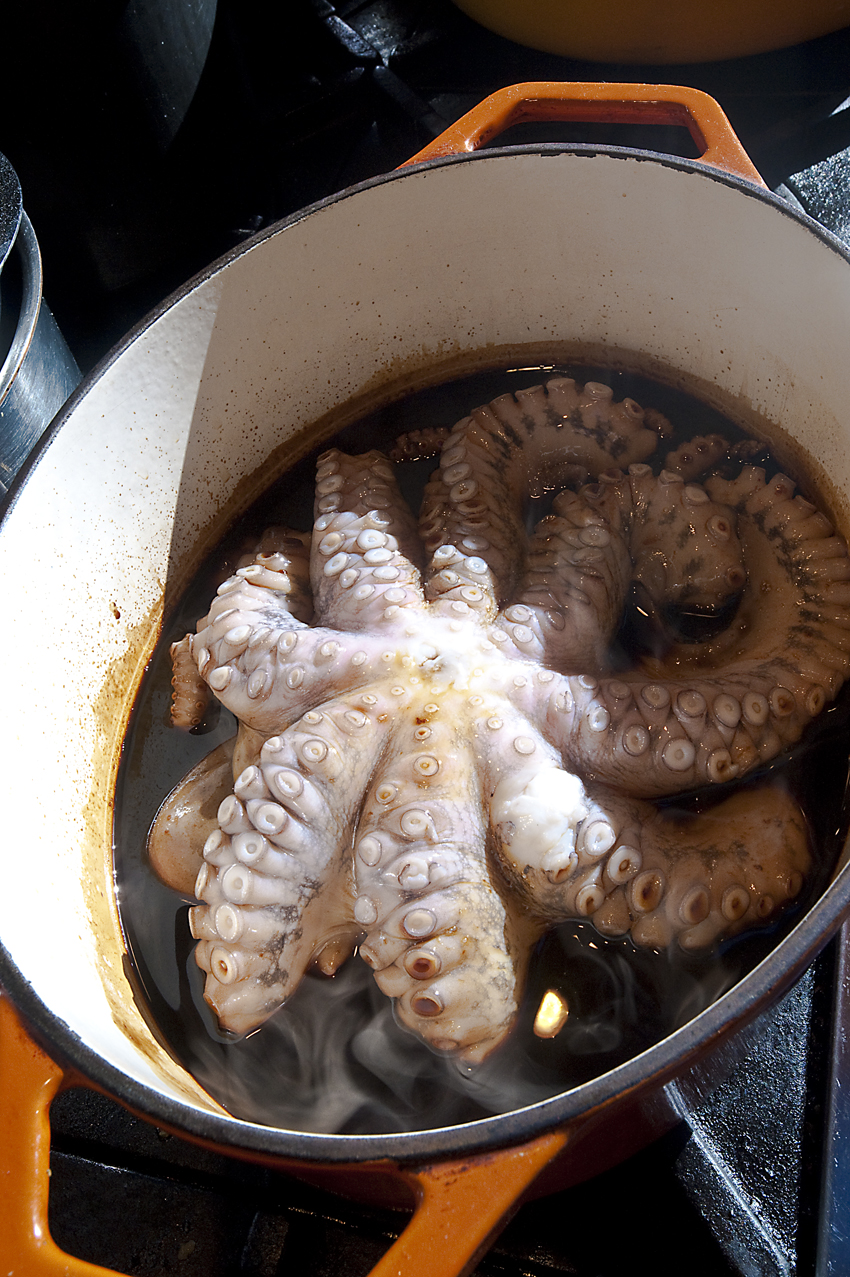
Combine all the ingredients for the court bouillon in an ovenproof casserole or dutch oven (we used our enamel coated cast iron dutch oven) and bring to a boil. Add the octopus and make sure the liquid level completely covers it. Place the lid on the casserole and allow the court bouillon to return to a simmer. Then transfer the casserole to a 275 degree oven and let the octopus braise for at least two hours. After an hour-and-a-half, check its readiness by snipping off part of a tentacle and chew it to gauge its texture. We like ours tender and creamy, yet firm; definitely not rubbery or mushy. When octopus achieves the desired texture, remove the casserole from the oven, set the lid ajar, and let the octopus cool in the braising stock before proceeding with whatever you’re going to do with it. We prefer to first remove the thickest, membraneous skin from the upper tentacles and bodies. You can cut up the tentacles into chunks or slices and serve them with fresh squeezed lemon juice and good quality olive oil, along with some of your favorite bread. You can also store the octopus slices in glass jars with olive oil, lemon juice, and some chopped parsley – perfect for an Italian “insalata di polpo”. To add another layer of flavor, quickly grill the tentacles prior to cutting them up. You’re only limited by your imagination as to what you can do with your braised octopus.