
This past week Rosaria and I stopped in and checked out Eataly on 23rd Street and 5th Avenue in Manhattan. It’s a great concept, well polished, and methodically thought out. It’s a combination of open air market and multiple cafes all focused on Italian cuisine, produce and culinary specialties housed in a ground floor, 10,000 square foot space. Rosaria made a bee line for the cheeses while I checked out the fish and the breads. We ended up with an armful of different Pecorinos and a couple of thick crust, rustic breads. On the way home Rosaria wondered why I wasn’t making these thick crusted breads.
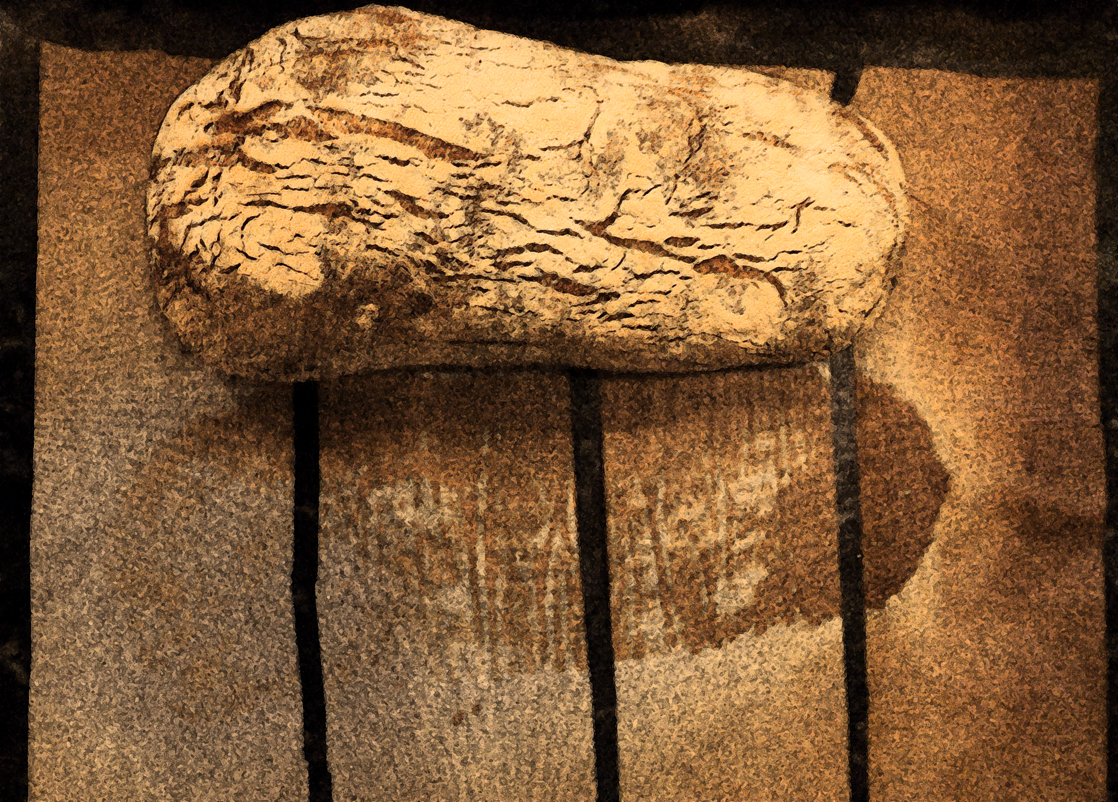
Well first, it helps if you have a wood fired oven which I don’t have. Second, it’s really important to have a way to inject steam into the wood fired oven right as the bread dough goes into the oven. I’ve tried several schemes to simulate the steam injection, some more successful than others. Anyway, by the time we got home I was thinking about revisiting ciabatta. In the past I’ve followed Carol Field’s formula for both the biga and the ciabatta bread. To take a look at that, go to my post about ciabatta from last April.
So, yesterday I went to my authority on all things to do with bread, Rose Beranbaum’s The Bread Bible. It seems as though while she was researching ciabatta bread she was on a mission to discover all nuances of this particular Italian bread which means lady slipper because of the final shape of the loaf.
Biga is a good starter, it helps the dough to rise, but it also imparts a great favor to the finished bread. For this particular trial loaf, I made just enough biga for one loaf. Obviously, the formula can be increased for a larger biga which can be feed and frozen as you use it.
Biga:
1/2 cup + 1/2 tablespoon (75g.) unbleached flour
1/16 teaspoon dried yeast
1/4 cup (59g) water @ room temp
At least 6 hours, or up to three days before making the bread, make the biga by combining the above ingredients in a bowl, stirring them together with a rubber spatula or wooden spoon until it is smooth, but still sticky. I gave it a minute or so of kneading on the granite counter, and then returned it to the bowl, covered with plastic wrap, and I let it sit for 24 hours.
Dough:
1 cup (136g) unbleached flour
1/4 teaspoon instant dried yeast
1/2 teaspoon salt
1/2 cup (134g) water
In the mixer bowl whisk together the yeast and the flour, then add the salt. As Rose points out, combining the yeast and the flour protects the yeast from the salt which will kill it, and your dough won’t rise. Next, add the water and the biga from the formula above. Mix it on low with the paddle attachment if you’re using a Kitchenaid mixer, for a few moments until everything is incorporated, then increase the speed to medium. Mix until the dough starts to pull away from the sides of the mixing bowl. If it doesn’t, add a tablespoon at a time of flour until it does.
Rises:
Take the dough out of the mixing bowl and put it in an oiled ceramic or plastic quart container. Cover it with plastic wrap and put it in a warm place until the dough has tripled in volume, about 1 ½ – 2 hours. Then carefully remove the dough from the container onto a floured piece of parchment paper. Try not to disturb the dough too much as you shape it into a 10″ by 4″ rectangle with your hands. Push gently on the sides to elongated the loaf and to make it wrinkle a little bit to give it that characteristic ciabatta look. Carefully dimple the dough every inch or so with a finger, and cover it and let rise for a 1 ½ – 2 hours.
Preheat your oven to 475º an hour before baking. Set the rack as low as it will go and place a small pan underneath it. Take the dough which is on parchment paper, flour it lightly and slip it into the oven onto a baking stone or in a baking tray. Meanwhile, toss a half dozen ice cubes into the small pan under the rack; this will produce steam which will add thickness to the crust.
After five minutes reduce the heat to 450º, turn on the convection fan if your oven has one, and continue to bake for another 20 minutes. Half way through, open the oven door, and turn the dough 180º to insure even browning of the crust.
When done, remove the baked bread from the oven and put it on a cooling rack. Wait a half hour, then break out the olive oil, some great cheese, and watch how fast a loaf of bread can disappear.
RMA
