
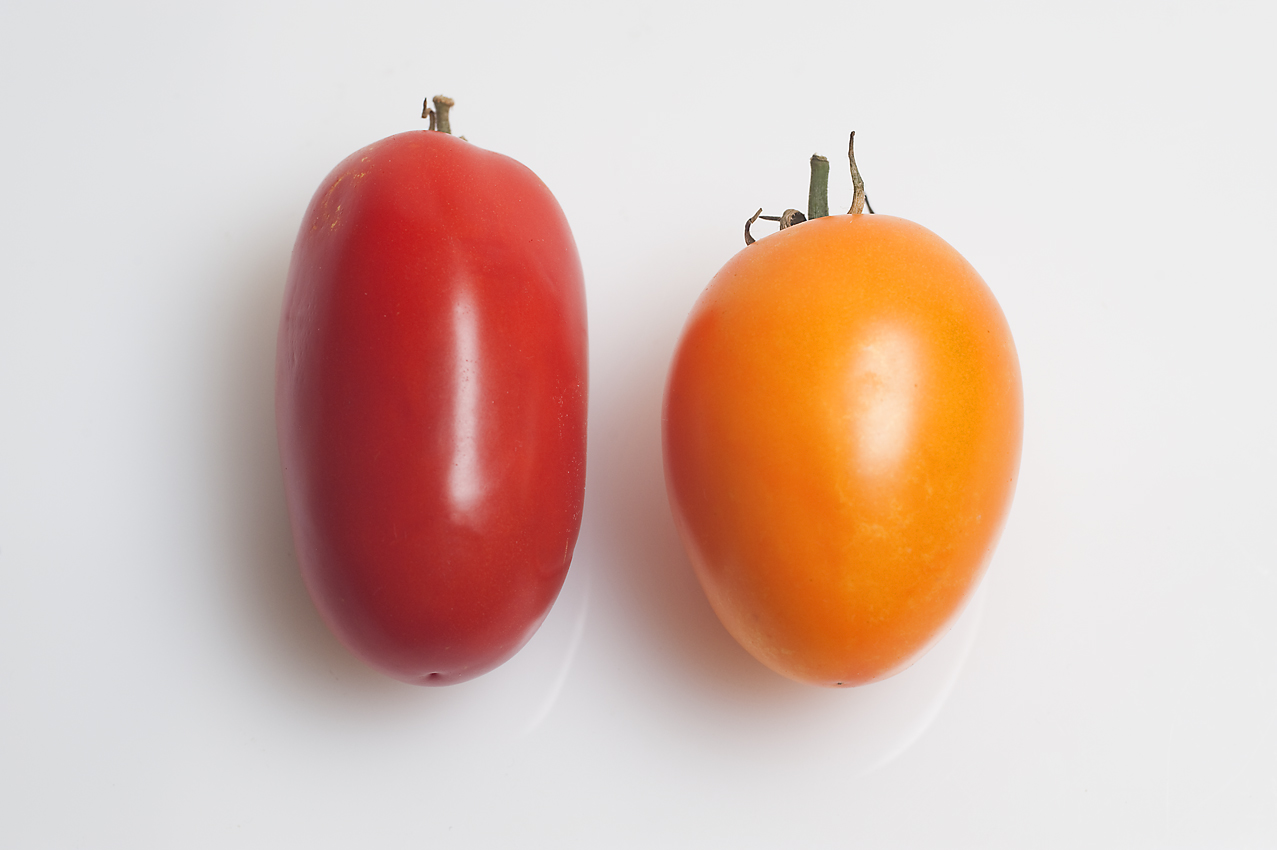
My father-in-law just returned from Sicily. He was born and raised there. Periodically he and his wife, Maria, return to visit with family, sample olive oil, and indulge themselves in all things Sicilian. So, on there way to our house yesterday, Mario stopped at the tomato farm in Calverton where he and I traditionally “pick’um up tomatoes” in hopes of getting several bushels of plum tomatoes from which to make tomato sauce. Unfortunately, he was too late in the season. Lucky for him, I made plenty of sauce earlier this month, and I gladly sent him and Maria on their way home with a dozen or so quart bottles of freshly made sauce.
As I said earlier, I was a little strange making sauce by myself this year. After picking six bushels of tomatoes, I brought them home and spread them out on my back deck for several days to finish ripening. 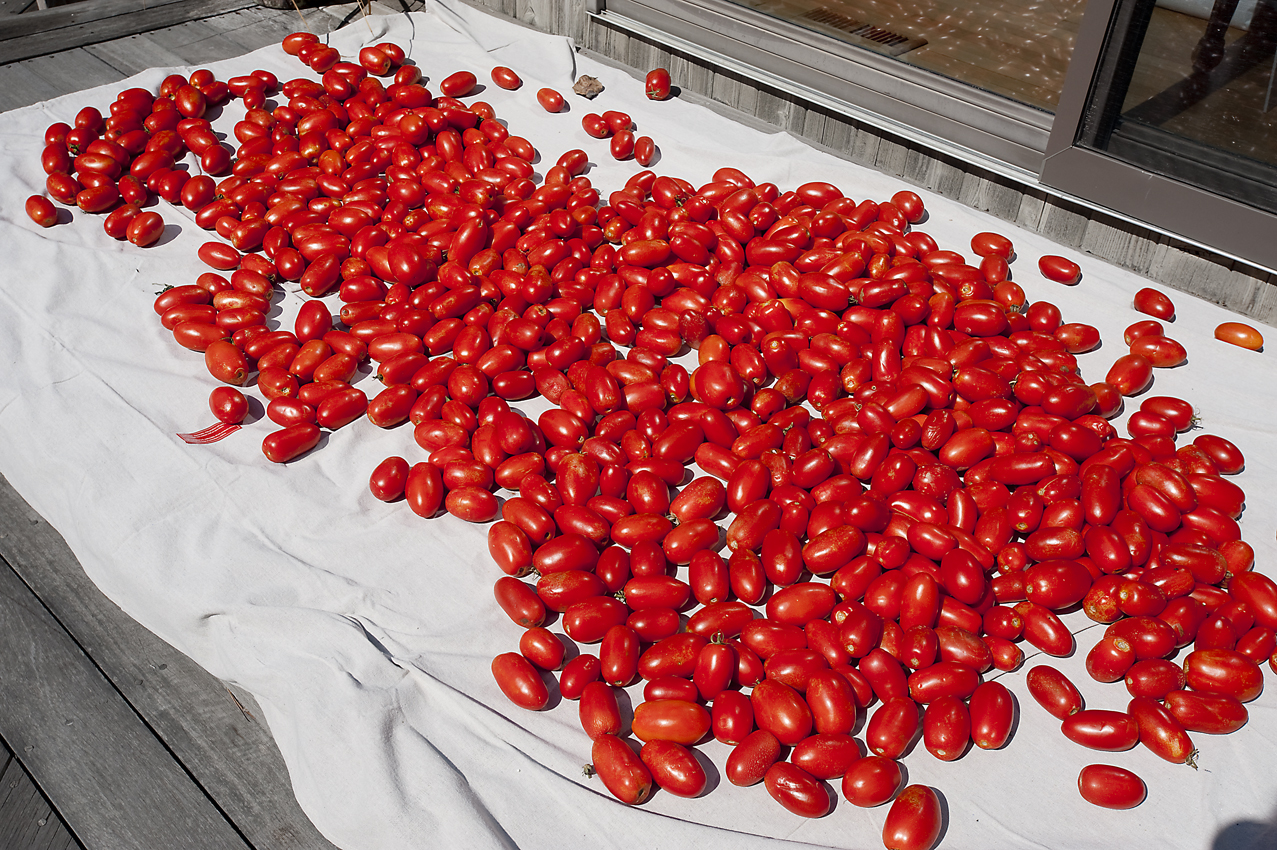 This year I picked 3 bushels of red plums, 2 bushels of orange plums, and a bushel of yellows. I also picked about a half a bushel of red grape tomatoes which made the best and sweetest sauce of all the tomatoes.
After that I washed them very carefully, sponging each one individually. I had already filled three large stock pots with water and I got them boiling. After washing the tomatoes, I dumped them into boiling water until the skins started to split, about ten minutes or so. After removing them from the boiling water, I spread them out on inclined plywood boards out on my deck. This not only drains them but it lets a lot of the water inside the tomatoes to seep out, rendering a thicker finished sauce.
After, the tomatoes sat for a while, until cool to the touch, I processed them through my father-in-law’s “mini-mite” tomato mill. It has a large hopper where you put handfuls of tomatoes, and then force them down onto an augur, which pushes the tomato through a sieve, rendering the sauce and pushing out the pulp, skins, and seeds. I love that part of the sauce making process: there is something extremely satisfying about watching the sauce collecting in a large pot under the mill.
After all the tomatoes are processed, I filled the glass canning jars, screwed on the lids and set them in the canning pots filled with boiling water. I left them in for about twenty minutes, and then removed them to my counter where I left them to cool. As I continued putting the jars in the boiling water to seal them, I listened to the lids “popping” as they contracted onto the mouths of the jars.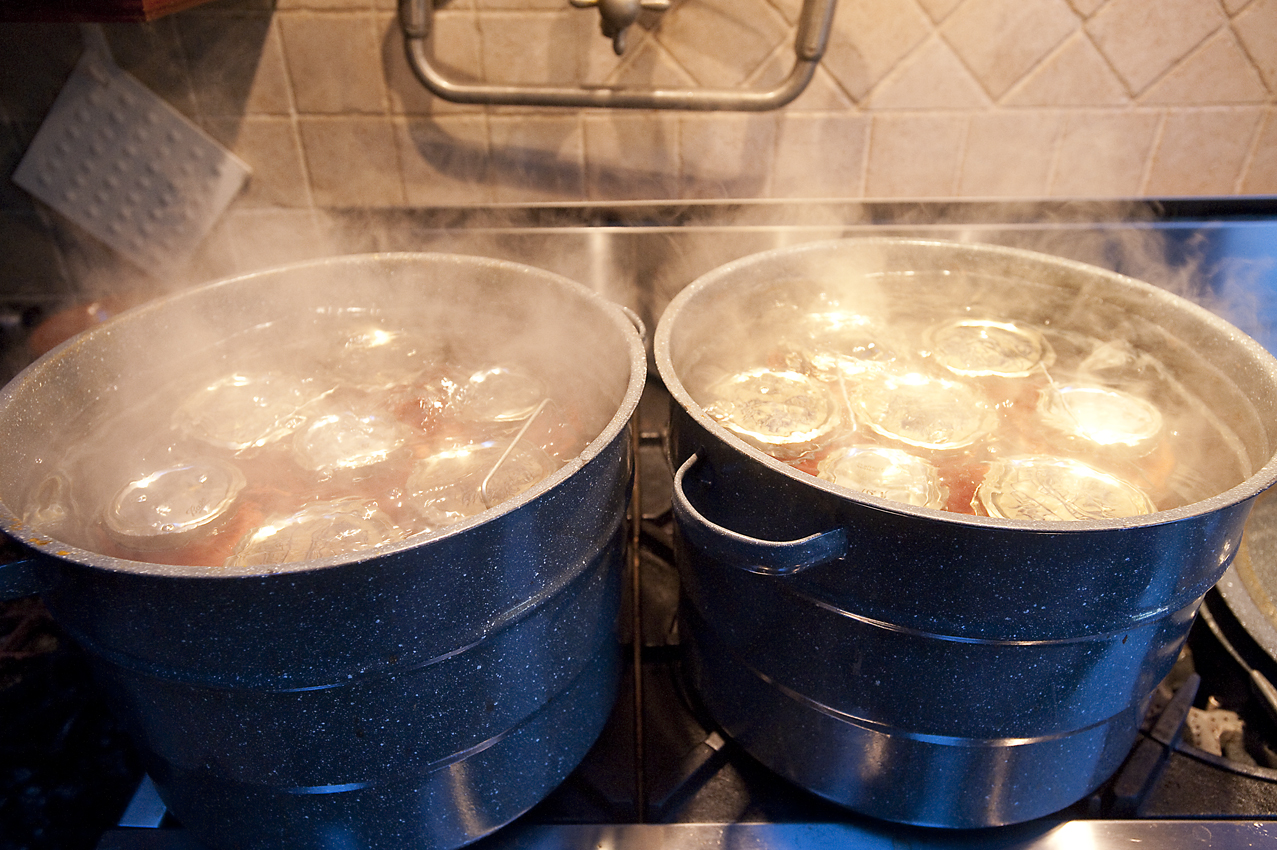
The last thing that I did was put all the jars in crates and store them away in a closet which stays cool all winter long. There’s nothing like fresh tomato sauce in January.

