
I was recently considering some of my food writings, and I decided it was time to tell you about the impending end of winter. The end of February and the beginning of March bring several important things to my little corner of the world. First, it’s the best time to go skiing in Colorado and Utah, something which I didn’t do this year. It’s also the first hope for loosening winter’s relentless grip on the Eastern End of Long Island, which this year brought us hurricane force winds and rain in the nor’easter last weekend that lashed us for two-and-a half days.
But the end of February and the beginning of March also brings fresh oranges from Florida, Texas, and California. It’s also orange season in Spain and Italy, especially in Sicily. So I thought I’d write a post about oranges, and especially about one of my favorite types: blood oranges (a variety of citrus sinensis). For all of you with the curiosity to know more about these wonderful citrus specimens I urge you to follow-up on gourmetsleuth.com: http://www.gourmetsleuth.com/Articles/Produce-638/blood-oranges.aspx. (Where would I be without gourmetsleuth.com?)
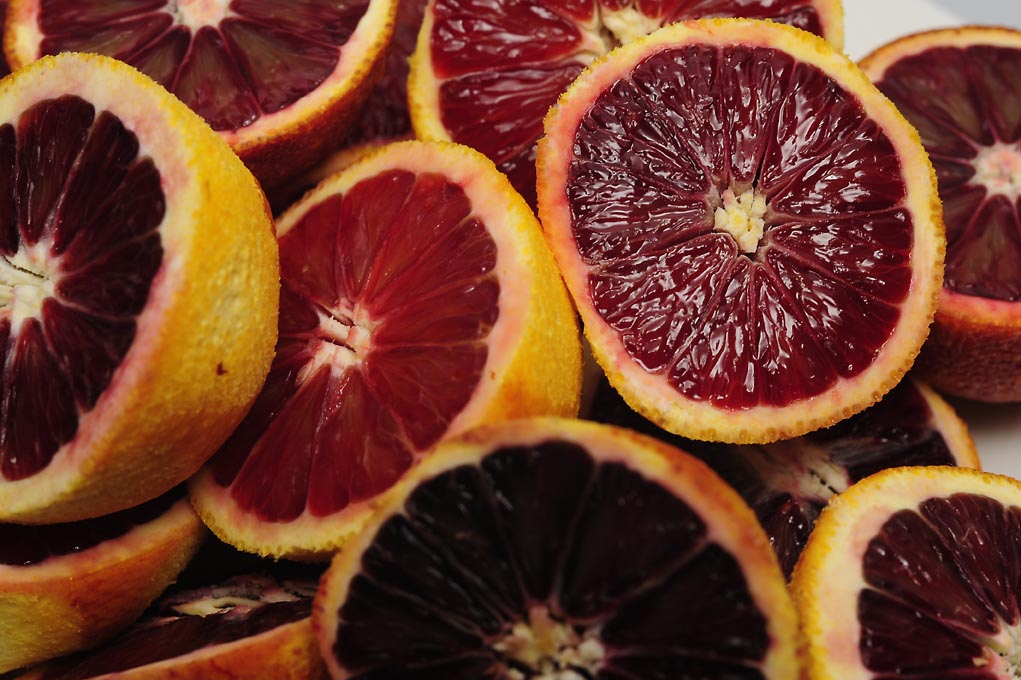 Most years, I look in the markets for blood oranges from Sicily, due obvious family imperatives. Mario, my Sicilian father-in-law, tells a story about back in Sicily after the Second World War, when there were shortages of everything including food. The men who harvested the blood oranges wouldn’t have anything to eat other than the blood oranges that they picked. After several days of only eating blood oranges, the pickers would begin to sweat red perspiration. (Is that really true, Mario? NO, no, Robert, I’m telling you that’s the way it was when they pick’em up the blood oranges back in those days.)
Although I found Sicilian blood oranges this year, I decided to cast my blood orange purveying net farther a stream, and I found some from California. They seemed smaller than their Italian cousins, but they also seemed juicier, and their color more intense. And because they’re from this country, they were considerable less expensive.
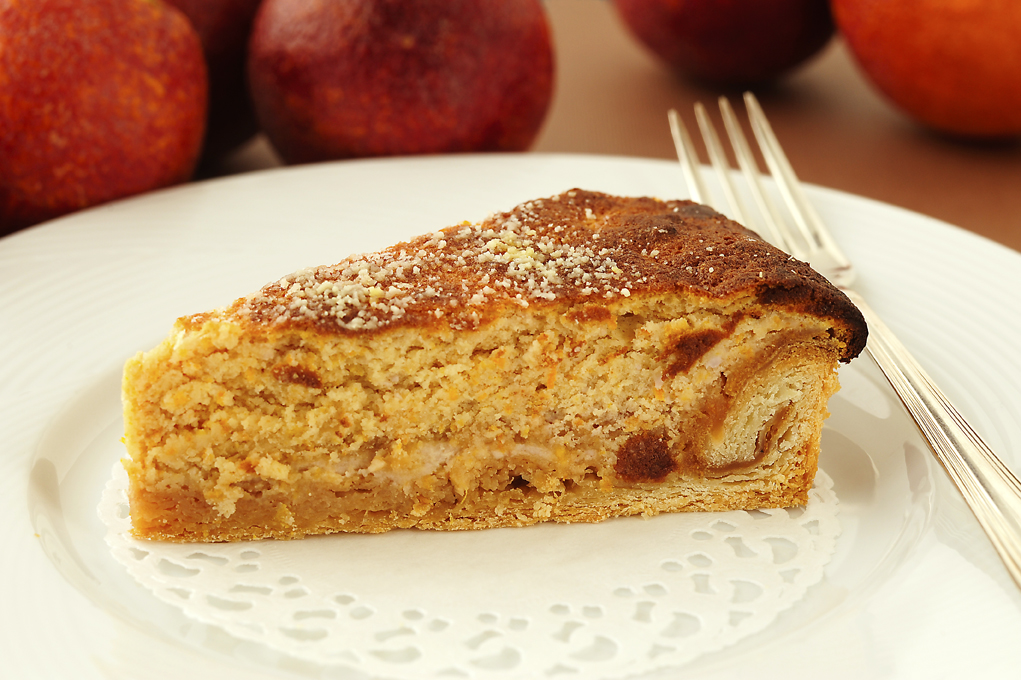
In the past I’ve made blood orange sorbet and blood orange granite, and I’ve used the blood oranges in sauces, especially dessert sauces like a crème anglais. But this week I decided to make a blood orange soufflé tart. Here’s how I did it.
For the Pastry Dough:
350 g Pastry Flour
14 T unsalted butter
½ tsp salt
1 T chilled vinegar
6 T iced water
Place the flour and salt in a food processor bowl and flick it several times to blend. Take the flour/salt mixture, put it in a plastic zip lock bag and place it in the freezer. Take 9 of the 14 tablespoons of the unsalted butter and cut them up into ½” cubes; put them in a plastic zip lock bag and refrigerate. Take the remaining 5 tablespoons of butter and cut them up into ½” cubes, place them in a plastic zip lock bag, and put in the freezer. Leave everything to chill for an hour or longer.
Once chilled, take the flour/salt and put it back in the food processor, and add the 9 tablespoons of butter from the refrigerator. Flick the on/off switch about a dozen times. Add the 5 tablespoons of butter from the freezer. Again, flick the off/on switch about a dozen times. Add the tablespoon of chilled vinegar (for a change I used rice wine vinegar this time), and then add the 6 tablespoons of iced water. Flick the on/off switch for about twenty seconds or so: you’re looking for a texture like rolled oats. Open the food processor, take a little of the dough and press it between your forefinger and thumb. It should stick together, but it shouldn’t be sloppy or wet. If it’s to dry, add more water, a tablespoon at a time; if it’s too wet, add a tablespoon at a time of pastry flour.
When you have the right consistency, dump the contents of the food processor onto a dry work surface, preferably marble, granite or wood, and quickly form the dough into a ball, and then flatten it out into a disk shape about ½” thick. Wrap it in plastic wrap and slide it into one of the zip lock bags that you used earlier. Place it in the refrigerator for at least an hour and-a-half, preferably overnight.
Meantime, prepare and make blood orange curd and blood orange soufflé:
For the Blood orange curd:
¾ C sugar
1 C freshly squeezed blood orange juice
2 T fresh lemon juice
Zest from 6 or 7 blood oranges
4 eggs
11 T unsalted butter
In the top pan of a double boiler, whisk together the sugar, juices, zest and eggs, then place over the lower double boiler pan which has water and bring to a slow boil. Turn the heat down to a simmer and whisk the mixture until thick. Remove from heat and strain into a clean container. Allow it to cool to room temperature, and then refrigerate until you’re ready to assemble and bake the tart.
For the blood orange soufflé:
9 egg yolks
1/3 C sugar
1 C + 2 T freshly squeezed blood orange juice
2 T lemon juice
Zest of 2 blood oranges
¾ C all purpose white flour
9 egg whites
2/3 C sugar
In a mixing bowl combine the yolks and the sugar, beat them with an electric mixer until light and fluffy; add the flour and then the juices and the zest. Whisk them together and pour the mixture into the top pan of a double boiler. Place it over the slowly boiling water that’s in the bottom half of the double boiler. Whisk until the mixture is very thick, careful not to overcook the eggs.
Place the egg whites in a mixing bowl and whisk with an electric mixture until the whites form soft peaks, then slowly beat in the 2/3 cup of sugar. Continue to whisk until firm peaks are formed. That’s your meringue. Fold the meringue into the thicken blood orange mixture.
Take the pastry dough out of the refrigerator, roll it out and line a buttered and floured 10 inch tart ring with it. Prick the dough throughout with the tines of a fork and place a piece of parchment paper on top of the pastry dough in the form. Use either ceramic pastry dough weights or dry beans, and blind bake the crust for 25 minutes at 375°.
Remove the baked crust from the oven and allow it to cool for several minutes. Spread the blood orange curd on the bottom of the baked crust and then scoop the blood orange soufflé mixture on top. Return to the 375° oven until the soufflé is cooked through and lightly brown on top, about 25 minutes. Remove from the oven, sprinkle the top with confectioner’s sugar and serve.

1 comment
[…] For the pastry dough follow this link. […]